
Writing
The Art of Living Behind the Song
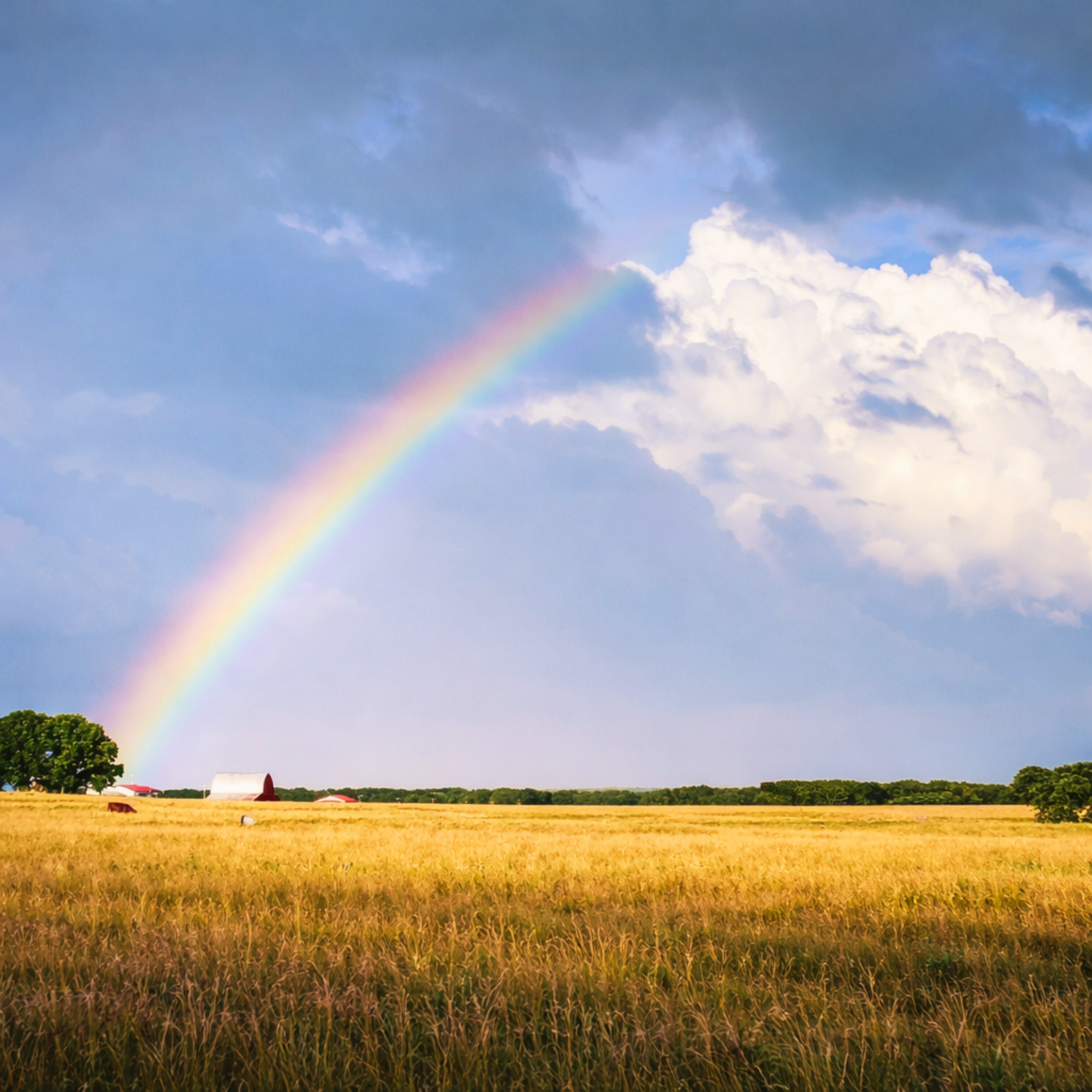
What it cost to write this song — and what it gave back
The Ozarks, Missouri. The moment the first idea arrived.
Some songs arrive in a moment. This one took five years, a pandemic, a death, a long silence, and a rainbow over an empty field.
THE WORLD THAT MADE THE SONG
There’s a version of 2020 that everyone lived through, and then there’s the private version. The one nobody posted. The one that happened at 2am with the lights off.
Mine included a job that disappeared, the kind of stillness that doesn’t feel like rest, and then grief — real grief — arriving without warning when my father died.
I’m not sure there’s a clean way to explain what it’s like when the world locks down and your personal world collapses at the same time. The outer silence and the inner noise were almost indistinguishable. Everything felt suspended. Nothing felt earned.
I had written songs before. I had written through hard things before. But this particular combination — no work, no structure, no father, no idea when anything would be normal again — produced something different. Not writer’s block. Something more like standing in a room that used to have furniture in it.
THE CLIMB OUT
At some point in that period, I drove to the Ozarks.
Not for any grand reason. Just to move. To be somewhere that felt bigger than four walls and a screen. I hiked. I camped. I let myself be somewhere that didn’t know what year it was.
There’s a specific kind of quiet in the Missouri Ozarks that doesn’t feel like absence — it feels like presence. The land has weight. The sky does something there.
And one afternoon, after a storm passed through, a rainbow appeared over a wheat field. One of those full ones — both ends visible, arcing clean over a red barn and a tree line.
I stood there for a long time.
I’m not a sentimental person by nature. I notice beauty, but I’m usually too inside my own head to let it land. That afternoon, something was different. Maybe I was just too emptied out to resist it. The rainbow didn’t fix anything. But it reminded me that the world was still doing what it does — still producing extraordinary ordinary things — while I was in the middle of my difficult ordinary things.
That’s where the first idea for this song was born.
WHAT THE LYRICS ARE ACTUALLY ABOUT
The song opens with something I’ve carried for a long time — this tension between feeling significant and feeling insignificant at the same time. Not one or the other. Both, simultaneously.
I am noble I am dust
A piece of work and turning rust
They say my father’s sins are mine
A debt I pay before my time
That’s not metaphor. Or it is, but it’s also literal. I was actively dealing with what my father left behind — financially, emotionally, in terms of identity. The line about the father’s sins isn’t religious language. It’s just the honest experience of inheriting someone’s unfinished business.
They paint a hero on the wall
Who gives his life and loses all
But I’m just trying not to fall
That image — the painted hero — is about the gap between the stories we’re told about resilience and the actual texture of surviving something. The hero in the story is noble and clear-eyed. I was neither. I was just trying to get through Tuesday.
The chorus came from that honestly. Not inspiration. Just the thing that was actually true.
Cause I’m a tragedy in motion
A speck of dust upon the ocean
Falling through the fingers of time
But I feel the sun I feel the rain
I’ll take the suffering and the pain
And burn it like a fuel for this climb
Yeah this is living
This is the art of living
I wanted the chorus to acknowledge both things at once. The smallness and the aliveness. The tragedy and the fuel. It didn’t feel resolved — it felt like the tension itself was the truth.
WHY IT TOOK FIVE YEARS
That afternoon in the Ozarks gave me the emotional seed. But I didn’t have the full song yet. Just a feeling and a handful of lines.
The song sat. Life moved. The world came back online. Grief went through its phases. The specific weight of that period started to resolve into something I could see more clearly — which, paradoxically, made it harder to write. The rawness had been useful. Distance required craft.
The second half of the lyric — the part about happiness not being ready made — came much later. That required actually believing it. You can’t fake that line.
Cause happiness ain’t ready made
It’s every single choice I’ve made
And though I’m in the gutter here
I’m looking at the stars from here
Oscar Wilde in the gutter. But not performing it. Just noticing it’s actually possible to do both — to be in a difficult place and still choose where you direct your attention. That took time to understand in my body, not just my head.
The closing lines were last to arrive, and they’re the ones I’m most attached to.
And I cannot say that I’ll be here tomorrow
That’s a weight that’s a gift that’s the sorrow
The measure of a man
Is in the rising
The uncertainty of tomorrow went from being a source of anxiety to something I understood as the actual condition of being alive. We don’t get permanence. We get today. And how we meet today is the whole story.
That’s the art of living.
— — —
The song was released in 2025. The rainbow photograph was taken that afternoon in Missouri in 2020. I’ve had it on my phone this whole time.
MUSIATA · musiata.com